On this page
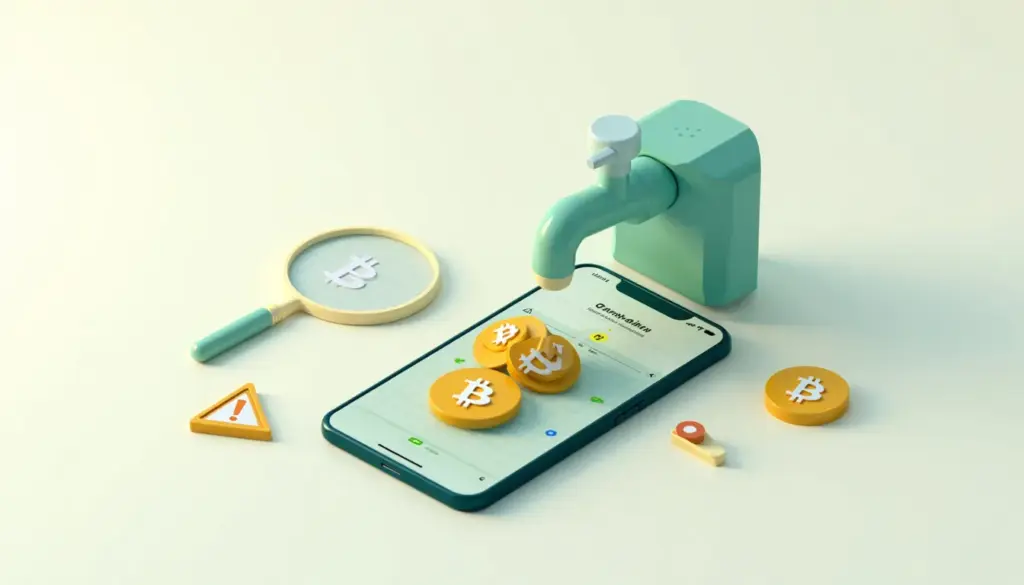
Most ‘free bitcoin’ offers are either ad-funded faucets that pay fractions of a cent, or outright scams that take what you already own. In its 2024 report, published 23 April 2025, the FBI’s Internet Crime Complaint Center logged $9.3 billion in cryptocurrency-related losses, and the FTC recorded $1.4 billion lost in 2024 where crypto was the payment method. This page explains how to tell a tiny, real reward from a scheme built to empty your wallet.
Is free bitcoin real?
Real bitcoin is never handed out for nothing. Bitcoin.org lists four ways to obtain it: earn it as payment for goods or services, buy it on an exchange, swap it directly with another person, or earn it through competitive mining. Small rewards do exist through faucets, learn-and-earn quizzes and tips, but any offer of a whole bitcoin for free is a scam.
Bitcoin’s official documentation frames mining as a competitive lottery, where miners confirm transactions and are rewarded by the network for their work. That reward is earned, not given away. Our bitcoin explainer covers supply, halvings and mining in more depth, and our free bitcoin guide looks at faucets and their downsides.
The table below maps the realistic ways people talk about getting ‘free’ bitcoin alongside the schemes that borrow the same promise.
| Method | Typical payout | Risk |
|---|---|---|
| Bitcoin faucets | Fractions of a cent to a few cents per claim; withdrawal thresholds can take weeks | Low money risk, poor time value; some sites harvest data or push aggressive ads |
| Exchange learn-and-earn quizzes | A few dollars in crypto per course, where offered | Low when run inside a licensed exchange’s own app; offers come and go |
| Crypto cashback cards | A small percentage of purchases back in crypto | Low for regulated issuers; read the fees and terms |
| Lightning Network tips | A few satoshis per tip | Very low; only accept tips from people you know |
| ‘Multiply your bitcoin’ giveaways | Nothing; you lose what you send | Fraud; funds are not returned |
| Free cloud-mining sites | Nothing, or a balance you can never withdraw | Fraud; often a front for a Ponzi-style scheme |
| ‘Recovery’ services | They keep your fee; stolen coins are rarely returned | Fraud; targets prior victims a second time |
How do bitcoin faucets work, and how much do they actually pay?
A bitcoin faucet drips tiny fractions of a coin, usually in exchange for viewing ads or solving captchas. One bitcoin divides into 100,000,000 satoshis, and a typical faucet pays only a handful per claim. At an illustrative $100,000 per bitcoin, a 20-satoshi claim is worth $0.02, so the return is almost always worth less than your time.
The unit maths shows why faucets never add up. A 20-satoshi claim is 0.00000020 BTC. At the same illustrative $100,000 rate, reaching $10 would take 500 claims, and many faucets limit claims to once an hour and set minimum withdrawal thresholds. Some also collect email addresses and device data, which is what actually funds the free coins. Our faucet and scam guide explains the mechanics and the red flags.
Which free crypto apps and rewards actually pay?
A few legitimate routes pay small amounts of crypto: quiz-based learn-and-earn programmes inside a licensed exchange’s own app, cashback paid in crypto by regulated card issuers, and Lightning Network tips of a few satoshis. None of them pay much, and none ask you to send crypto first. Check an exchange’s own help centre for current campaigns, because offers change.
Learn-and-earn rewards are the most reliable of the three: exchanges have paid small amounts for completing short lessons and quizzes, with no deposit required. Cashback cards return a small percentage of purchases in crypto but carry the normal card fees and terms. Lightning tips move a few satoshis near-instantly between people who already trust each other. As of October 2026, these programmes come and go and are not offered in every country, so check the exchange’s own site. Our exchange guide explains how to pick a licensed platform before you sign up anywhere.
What are the most common free bitcoin scams?
FTC data points to four repeat patterns: giveaway and doubling scams where an impersonated celebrity promises to ‘multiply’ what you send, fake investment platforms that promise a return, recovery services that charge victims a second time, and impersonation scams that push victims toward a bitcoin ATM. Only scammers demand payment in cryptocurrency, the FTC warns.
The giveaway pattern is the oldest. Between October 2020 and March 2021, US consumers reported losing more than $80 million to crypto investment scams, and more than $2 million of that went to Elon Musk impersonators alone, according to the FTC. The median reported loss was $1,900.
Bitcoin ATM fraud is the fastest-growing version. In the first half of 2024, losses at bitcoin ATMs topped $65 million, with a median loss of $10,000, the FTC reported. About 86% of those reports involved government, business or tech-support impersonation, and people aged 60 and over accounted for about 71% of the money lost.
‘Recovery’ services are a secondary scam: they target people who already lost coins, take an upfront fee and deliver nothing. The FTC lists them alongside blackmail scams that threaten to publish photos unless the victim pays in crypto.
Recent regulator data
| Date | Event | Source |
|---|---|---|
| 17 May 2021 | FTC: more than $80 million lost to crypto investment scams from October 2020 to March 2021, a tenfold yearly rise, including $2 million to Elon Musk impersonators | FTC press release |
| 3 September 2024 | FTC: bitcoin ATM scam losses top $65 million in the first half of 2024; median loss $10,000 | FTC data spotlight |
| 10 March 2025 | FTC: $12.5 billion in total fraud losses in 2024, including $1.4 billion where crypto was the payment method | FTC consumer alert |
| 23 April 2025 | FBI IC3: $9.3 billion in cryptocurrency-related losses in 2024 across 149,686 complaints, a 66% rise on 2023 | The Block on the IC3 report |
As of October 2026, the 2024 figures above are the most recent full-year numbers the FTC and FBI have published. They come from complaints, and both agencies say most frauds go unreported, so the true totals are higher.
How can you tell if a bitcoin website is real?
Check the domain against the company’s official site, and verify any exchange or wallet against a regulator register before sending money. Be suspicious of promises of a return, celebrity ‘multiply your coins’ pitches, and any request to send crypto to an address you did not create yourself. Legitimate rewards never ask for a deposit or your seed phrase.
Work through these checks before you send anything:
- Type the real domain yourself instead of clicking a link, and compare it character by character to the official site.
- Look the platform up on a regulator register where it claims to be licensed, such as the FCA register in the UK or the ESMA MiCA register in the EU.
- Search the name plus the word ‘scam’ and read regulator notices, not the site’s own testimonials.
- Reject any offer that promises a return or asks you to send crypto to ‘verify’ or ‘activate’ a balance.
- Never enter a seed phrase on a website; that phrase is the master key to your wallet.
Keep your coins in a wallet you control and protect the seed phrase; our wallet guides show how. Start any purchase or reward from a licensed exchange, covered in our exchange hub and coin directory.
What should users do now?
If you have lost money, report it: to the FTC at ReportFraud.ftc.gov, to the FBI at ic3.gov, and to the CFTC or SEC for investment fraud. If you have not lost money, move any crypto to a wallet you control, never share your seed phrase, and treat ‘free bitcoin’ as a curiosity, not income.
Reporting matters because the FTC and FBI figures above are built entirely from complaints. The FTC’s cryptocurrency scams page lists the exact routes: ReportFraud.ftc.gov, CFTC.gov/complaint, sec.gov/tcr and ic3.gov. Keep records of the address you sent to and the messages you received, then stop all contact with the scammer.
For the practical side of claiming the tiny legitimate rewards, revisit our free bitcoin guide, and store anything you do earn in a wallet you hold, not on the site that paid it.
FAQ
How can you tell if a Bitcoin website is real?
Check the domain against the official company site and look it up on a regulator register. Reject promises of a return, celebrity ‘multiply your coins’ pitches, and any request to send crypto to an address you did not create. A real rewards programme never asks for a deposit or your seed phrase.
Is it possible to get a free bitcoin?
Not in any meaningful amount. Legitimate routes pay tiny fractions of a coin through faucets, learn-and-earn quizzes, cashback and tips. Any site promising a whole bitcoin for nothing, or for a small ‘activation’ payment, is a scam.
Is there a free Bitcoin mining site that actually pays for it?
No. Bitcoin mining is competitive work that needs hardware and electricity; bitcoin.org describes it as a competitive lottery that rewards miners for confirming transactions. ‘Free cloud mining’ sites that promise payouts typically show a fake balance you can never withdraw.
Is free bitcoin real?
Only in tiny amounts. Faucets, learn-and-earn rewards and tips can pay real satoshis, but the amounts are worth cents. The ‘free bitcoin’ label is more often a doorway into ad-funded faucets or outright scams, which is why regulators log billions in losses.
Are free bitcoin sites legit in the USA?
Some are legal but low value, while many are fraud. US agencies logged $9.3 billion in crypto-related losses in 2024 and $1.4 billion where crypto was the payment method. If you lost money, report it at ReportFraud.ftc.gov and ic3.gov.
Source register
- 01FTC: FTC Data Shows Huge Spike in Cryptocurrency Investment Scamssearch.ftc.gov
- 02FTC: Bitcoin ATMs: A payment portal for scammersftc.gov
- 03FTC: Top scams of 2024consumer.ftc.gov
- 04FTC: What To Know About Cryptocurrency and Scamsconsumer.ftc.gov
- 05FBI: Internet Crime Complaint Center (IC3)ic3.gov
- 06The Block: FBI says Americans over 60 lost nearly $3 billion to crypto scams in 2024theblock.co
- 07Bitcoin.org: Bitcoin - Open source P2P moneybitcoin.org
- 08Bitcoin.org: FAQ - Bitcoinbitcoin.org
- 09Bitcoin.org: How does Bitcoin work?bitcoin.org
Last updated Spotted an error? Send a correction